Imagine having a direct channel to people who already showed interest in you. No algorithm deciding how many of them will see your message. No fee for every single impression. That is what email marketing is when it is done right. Your contact list is one of the few assets in digital marketing that you truly own, unlike social media followers, who really belong to the platform.
Many business owners wave email off as an outdated channel. The reality is the opposite. While organic reach on Facebook and Instagram drops every year and ad prices climb, email remains the channel with one of the highest returns on investment. The reason is simple: you are writing to people who gave you their address and expect to hear from you. In this guide we look at how to build email marketing that brings orders instead of landing in the spam folder.
What email marketing actually is
Email marketing is sending commercial and informational messages to a list of contacts who agreed to receive them. This covers newsletters, promotional offers, automated sequences for sign-ups or abandoned carts, and post-purchase messages. What they all share is that they go to people you already have some relationship with.
This is the big difference from advertising. When you run ads on Google or Meta, you pay to reach strangers. With email you talk to an audience that already knows you and has shown interest. That is why response rates are usually several times higher, while the cost of sending is minimal compared to paid ads. The channel works especially well alongside the others. Ads and content bring new people in, and email turns them into customers and then keeps them.
How email differs from social media
The core difference is ownership of the relationship. If a social platform changes its rules tomorrow or blocks your profile, you lose access to the audience you built over years. An email list stays yours no matter what. You can export it, move it to another platform, and keep talking to those people without any middleman.
Why email marketing works in 2026
The channel has several advantages that make it a strong fit for small and medium business. First, the cost to start is low. You can begin on a free plan on most platforms while your list is small. Second, results are measured precisely. You see who opened, who clicked, and who bought, which allows constant improvement.
Third, automation does the work for you around the clock. Once set up, a sequence of emails welcomes each new contact, reminds about a forgotten cart, and wins back old customers without you touching anything. This combination of low cost, precise measurement, and automation makes email marketing one of the most profitable channels a business has today.
How to build a contact list
Everything in email starts with the list. One golden rule applies here: never buy ready-made address databases. Sending to people who did not opt in damages your reputation, breaks the law, and almost certainly ends up in the spam folder. A list is built organically, person by person, and that is exactly why it is so valuable.
The most reliable way to gather contacts is to offer something in exchange for the address. It could be a discount on a first order, a useful guide to download, access to gated content, or simply a promise of timely offers. The sign-up form should be visible on the site, not hidden at the bottom of the page. A well-timed popup, a field in the blog, and a step at checkout all work well together.
Consent and data protection
When collecting contacts in the European Union, the GDPR applies. It requires clear consent from the person and transparency about how you will use their address. In practice this means not adding people without their knowledge and having a visible unsubscribe option in every email. Following these rules is not just a legal duty. It builds trust and keeps your list free of people who do not want to hear from you.
Types of email campaigns
Email marketing is not a single kind of message but several different formats, each with its own goal. Understanding the differences helps you build a meaningful strategy instead of sending random letters.
| Campaign type | Goal | When it is sent |
|---|---|---|
| Welcome sequence | Creates first impression and trust | Right after sign-up |
| Newsletter | Keeps attention and builds authority | Regularly, for example weekly |
| Promotional email | Drives a specific sale | During a campaign or season |
| Abandoned cart | Recovers an unfinished order | Hours after leaving the site |
| Re-engagement | Wakes up inactive contacts | After a period of silence |
The welcome sequence is perhaps the most important of all. It greets the new contact while interest is highest and sets the tone for all future communication. The abandoned cart is a classic example of automation that directly recovers money. A large share of online store visitors add a product and leave. A timely reminder email brings a significant portion of them back.
Segmentation and personalization
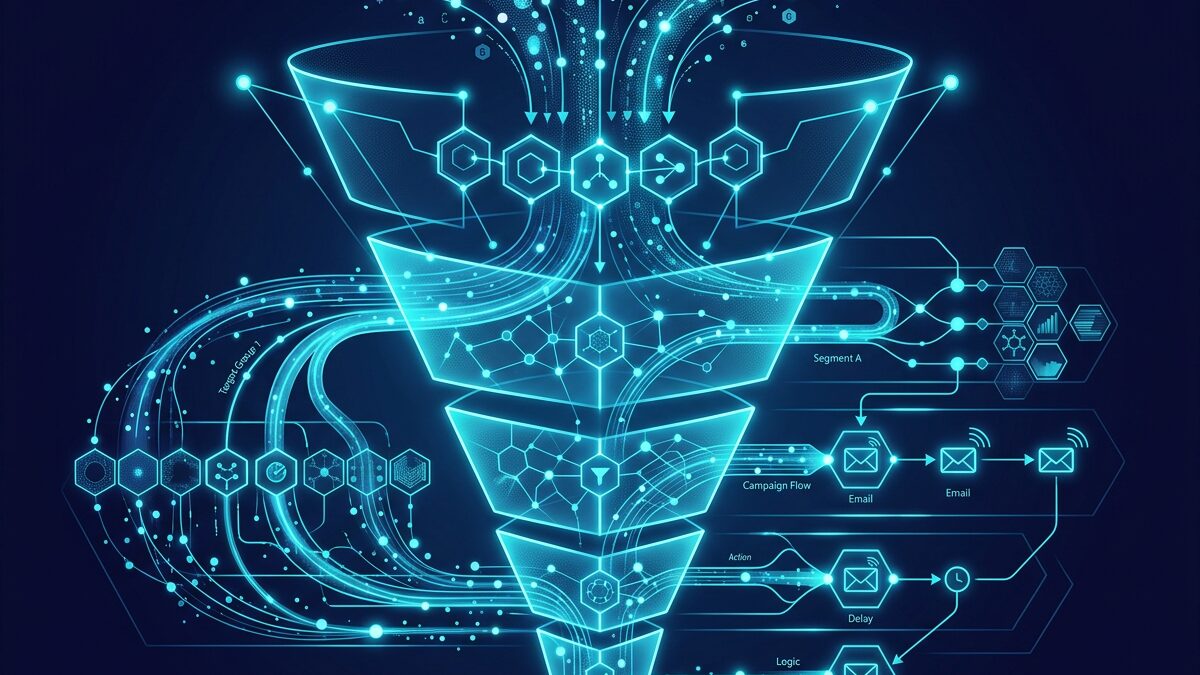
Sending the same message to your whole list wastes potential. The people in your base are different: some are new, some are regular customers, some have not bought in months. Segmentation means splitting the list into groups by shared traits and writing to each group what is relevant to it.
You can segment by purchase history, by email open behavior, by location, or by interest in a specific category. A clothing store, for example, can send a kids' clothing offer only to people who already bought such items. The result is a higher open and click rate, because the message hits exactly the person who needs it. Personalization builds on segmentation by adding the person's name and recommendations based on their earlier actions.
Why generic emails fail
When the recipient senses that a letter was sent to thousands of people without distinction, their attention drops. The reverse is also true. A message that reflects who you are and what you browsed feels like personal care rather than a mass blast. Segmentation is what turns the list from an anonymous crowd into individual people with concrete needs.
Email automation
This is where email marketing meets the wider world of business automation. An automated sequence is a series of emails triggered by a specific user action and sent on their own by a preset schedule. You set it up once and it runs for months without intervention.
A classic example is a three-email sequence after sign-up: the first welcomes and introduces the brand, the second delivers useful value, and the third makes an offer. Another example is a post-purchase chain that thanks the customer, asks for a review, and later suggests a complementary product. These scenarios run continuously and scale your communication without extra work. If you want to connect email with other systems, such as stock levels or a CRM, it helps to build full business process automations that keep the data in sync.
Metrics that truly matter
Success in email marketing is measured, not felt. There are a few indicators worth tracking to understand what works. Open rate shows how many recipients opened the letter and depends heavily on the subject line and the sender reputation. Click rate shows how many reacted to the content inside.
It is important, though, not to stop at these numbers. The end goal is not an open but an action: a purchase, an inquiry, a sign-up. So track how many sales or requests come from the email channel. Unsubscribes and spam complaints carry information too. If they rise sharply, you are sending too often or to the wrong people. A healthy approach balances frequency so that you are useful without being annoying.
How to keep improving
The best way to grow is through testing. Try two different subject lines for the same email and see which one gets opened more. Experiment with send time, text length, and action buttons. Small improvements add up and over time turn an average campaign into a strong one. If you do not have time for that, professional marketing channel support takes over the testing and optimization for you.
Common mistakes that cost money
Even well-designed email marketing can fail because of a few typical mistakes. The first is sending too often. When the recipient sees your name every day without a real reason, they start ignoring you or unsubscribe. The second is the opposite extreme: months of silence, then a sudden offer. The list goes cold and people no longer remember who you are.
Another frequent mistake is ignoring mobile devices. A large share of emails open on a phone, so a letter that looks broken on a small screen loses the reader instantly. Finally comes the weak subject line. If it does not intrigue, the content inside does not matter, because no one will see it. The subject is the first and often the only thing the recipient judges in a fraction of a second.
Connecting email with the rest of your marketing
Email rarely works alone. It is part of a bigger machine where each channel feeds the next. Ads on Google and social media bring new visitors to the site. A well-built landing page turns them into contacts through a sign-up form. From there email takes over the job of keeping them and turning them into customers.
If you run an online store, the link is even more direct. Every order feeds the list with a new customer, and automated sequences bring those customers back for repeat purchases. That is exactly why online store development and email marketing go hand in hand. The channel does not replace the other efforts, it multiplies them by extracting the maximum from the traffic you already pay to attract.
Frequently asked questions
How often should I send emails?
There is no universal answer, but a good start is one to four times a month for a newsletter, plus automated messages triggered by an action. More important than frequency is value. If every letter brings something useful, people will wait for it. If you send only offers, fatigue comes fast. Watch unsubscribes and adjust the rhythm to the reaction.
Is it legal to email my customers?
Yes, as long as you have consent and follow the GDPR. That means people gave you their address themselves and have a clear option to unsubscribe at any time. Buying ready-made lists is risky and usually hurts more than it helps. A clean list of voluntary contacts is both more legal and more effective.
Which email marketing platform should I choose?
The choice depends on the size of your list and your needs. To start, most platforms offer a free plan up to a certain number of contacts. Look for an easy editor, automation options, and good deliverability. If you are not sure which to pick, we can advise you for your specific case through our contact page.
Does email marketing work for a small business?
It works, and especially well. A small business often has a closer relationship with its customers, and email keeps it alive. Even a list of a few hundred people can bring regular orders if the communication is personal and timely. The low cost of the channel makes it accessible even on a modest budget.
How long until I see results?
Automated sequences like the abandoned cart bring results almost immediately, because they catch a person in a moment of active interest. Building general authority and loyalty through a newsletter takes longer, usually several months of consistent communication. Email marketing is a long-term channel that strengthens as the list grows.
Conclusion
Email marketing remains one of the most underrated and at the same time most profitable channels for business. It gives you a direct link to people who already know you, a low cost to send, and precisely measurable results. The secret is not volume but approach: a clean list, meaningful segmentation, and automation that works instead of you.
If you want to build an email strategy that brings real orders, or to connect email with your other marketing channels, the WEBPROGRESS team can help. Write to us through the contact page and you will receive an individual offer within 24 hours, tailored to your business and goals.